

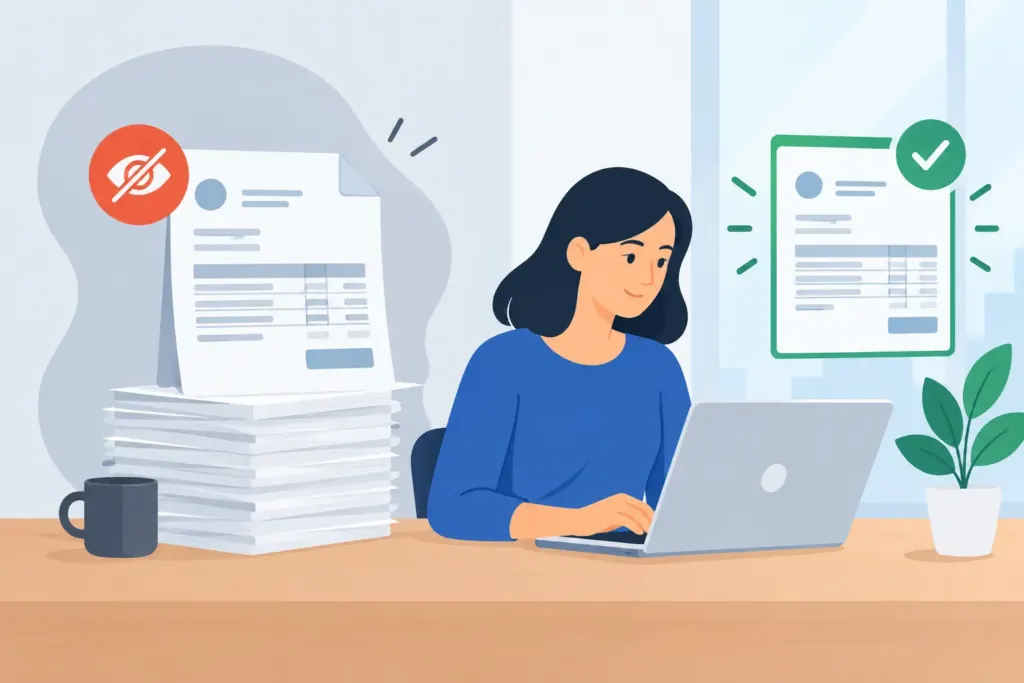
A completed job should lead to a paid invoice, not a guessing game. Yet for contractors, freelancers, and service crews, why invoices get ignored often comes down to small breakdowns between the jobsite and the customer’s inbox: a late bill, a vague description, a missing payment link, or a follow-up that never happens.
The good news is that most ignored invoices are preventable. Getting paid faster is less about chasing harder and more about making the payment process obvious, professional, and easy from the first estimate through the final receipt.
Why invoices get ignored after good work
Your customer may be happy with the work and still fail to pay on time. That can feel personal when you have spent hours solving their problem, but it usually is not. People are busy, emails get buried, and any friction gives an unpaid bill permission to sit another week.
For field-service businesses, the risk gets bigger when billing happens after you leave the job. A homeowner may have approved a repair in the driveway, watched the work get done, and thanked you at the door. Three days later, an invoice arrives without context. Now they have to remember the scope, find the email, open it on a different device, and decide how to pay. Every extra step slows down cash flow.
The invoice arrives too late
The longer you wait to invoice, the less urgent the job feels to the customer. Details fade, paperwork piles up, and their budget may already be committed elsewhere. Late invoicing also sends the wrong signal: if payment was not urgent enough for you to request promptly, customers may assume it is not urgent for them either.
Send the invoice when the work is fresh. For a completed service call, that often means before you leave the property or immediately after completing the appointment. For larger projects, invoice at the milestones written into the estimate or contract. Consistency matters more than finding a perfect moment.
The bill is unclear or does not match expectations
A customer is more likely to pause payment when they do not understand what they are being charged for. Generic line items such as “labor” or “materials” can create questions, especially when the final total differs from an earlier estimate.
Use plain descriptions that connect the invoice to the actual work: “Replace kitchen sink shutoff valve,” “Diagnose and repair AC capacitor,” or “Install 200-amp breaker panel.” Include labor hours, materials, approved change orders, deposits already paid, and the job address when helpful. A branded, organized invoice reassures the customer that they are paying a real business with clear records, not a rushed request sent from a phone.
There is a balance. Do not turn a simple service invoice into a three-page document full of internal notes. Give the customer enough detail to recognize the value, not so much detail that the bill becomes hard to read.
Paying takes more effort than it should
Many invoices are ignored because the customer intends to pay later, then forgets. If they have to call for card details, mail a check, download an attachment, or log into an unfamiliar portal, “later” can become 30 days.
Offer the payment methods your customers already use. For many service businesses, that means a secure card payment option, ACH where appropriate, and digital wallets or services customers recognize. Put the payment action directly in the invoice or payment request. State the due date clearly and show the total due where it cannot be missed.
Convenience has a cost, so choose payment options with your margins in mind. Card processing fees may be worth it when they shorten the time between finishing work and having usable cash in your account. For higher-dollar projects, bank transfers or deposits can be a better fit. The goal is not to offer every option. It is to avoid making the customer work to give you money.
The invoice goes to the wrong person or wrong inbox
On commercial jobs, the person who requested the service may not be the person who approves bills. Even residential customers may use a spouse, office manager, or bookkeeper to handle payments. If you send the invoice to only one contact without confirming the billing process, it can sit untouched.
Ask a simple question before the job closes: “Who should receive the invoice, and is there anything your office needs to process it?” For recurring commercial clients, keep billing contacts, purchase order requirements, and approval rules attached to the customer record. That small bit of organization prevents repeat delays.
There is no follow-up system
A friendly reminder is not pushy. It is part of running a professional operation. The problem is that follow-up is easy to skip when you are driving to the next call, managing a crew, ordering parts, and answering customers.
Set a standard schedule so you do not have to decide what to do every time. Send a confirmation when the invoice is issued, a reminder a few days before the due date for larger bills, and a brief payment reminder when it becomes overdue. Keep the language direct and respectful: “Your invoice for the completed service on 2026 is due today. Please use the payment option included to take care of the balance.”
If a customer has a question, respond quickly and document the answer. A disputed invoice should not disappear into a text thread or a voicemail. Keep the job notes, photos, estimate, approved changes, and payment history together so you can resolve the issue without hunting through paperwork.
Fix the gaps that cause ignored invoices
The strongest payment process begins before the invoice exists. Start with an estimate that clearly defines the work, pricing, deposit, and payment terms. When the customer approves it, you have a shared record of what they agreed to buy.
As the work happens, capture the details while you are on site. Track crew time, save receipts, add job photos, and record materials used. This protects your margin and makes final billing faster. It also prevents the common problem of reconstructing a job from memory at the end of a long week.
When the job is done, convert that information into an invoice right away. A mobile-first workflow is especially useful here because the office is not always where the work happens. With InvoiceGenie Pro, a completed appointment or estimate can become an invoice from the field, helping you keep the job details intact instead of retyping them later.
Make payment terms impossible to miss
Payment terms should be clear before work begins and visible again on every invoice. Use a specific due date, not just “Net 15” if your customers may not understand the term. If late fees apply, state them in the estimate and invoice, and make sure they comply with your agreement and local requirements.
For smaller service calls, payment due upon completion is often the cleanest approach. For remodels, installations, or recurring work, deposits and progress payments protect both sides. The right structure depends on project size, customer relationship, material costs, and how much cash you need to keep the job moving.
Build a repeatable reminder process
Do not rely on memory or a spreadsheet you only open when cash gets tight. Your process should show which invoices are sent, viewed, paid, due soon, and overdue. That visibility lets you focus your follow-up on the accounts that need attention.
Keep reminders short and factual. Avoid emotional messages, even when a balance is frustrating. If an invoice is significantly overdue, move from automated reminders to a direct phone call and ask whether there is a billing issue you need to resolve. A calm conversation can uncover a missing purchase order, a bad email address, or a question about the scope before the problem grows.
Protect cash flow without damaging relationships
Getting paid on time does not require treating every late customer like a bad customer. Long-time clients may have a temporary delay. New customers with a pattern of missed commitments may require tighter terms, deposits, or payment before further work begins.
The key is to apply your policy consistently. When customers know how and when you bill, they are less likely to be surprised. When your records are organized, you can have confident conversations based on facts rather than frustration.
A fast invoice, clear job details, simple payment choices, and steady reminders turn payment into the natural final step of the work. Ditch the paper clutter, bill while the job is still fresh, and give every customer an easy way to close the loop.